
Delicious Coffee. Positive Impact.
We exist to bring you delicious coffee experiences in a way that improves livelihoods and protects our environment.
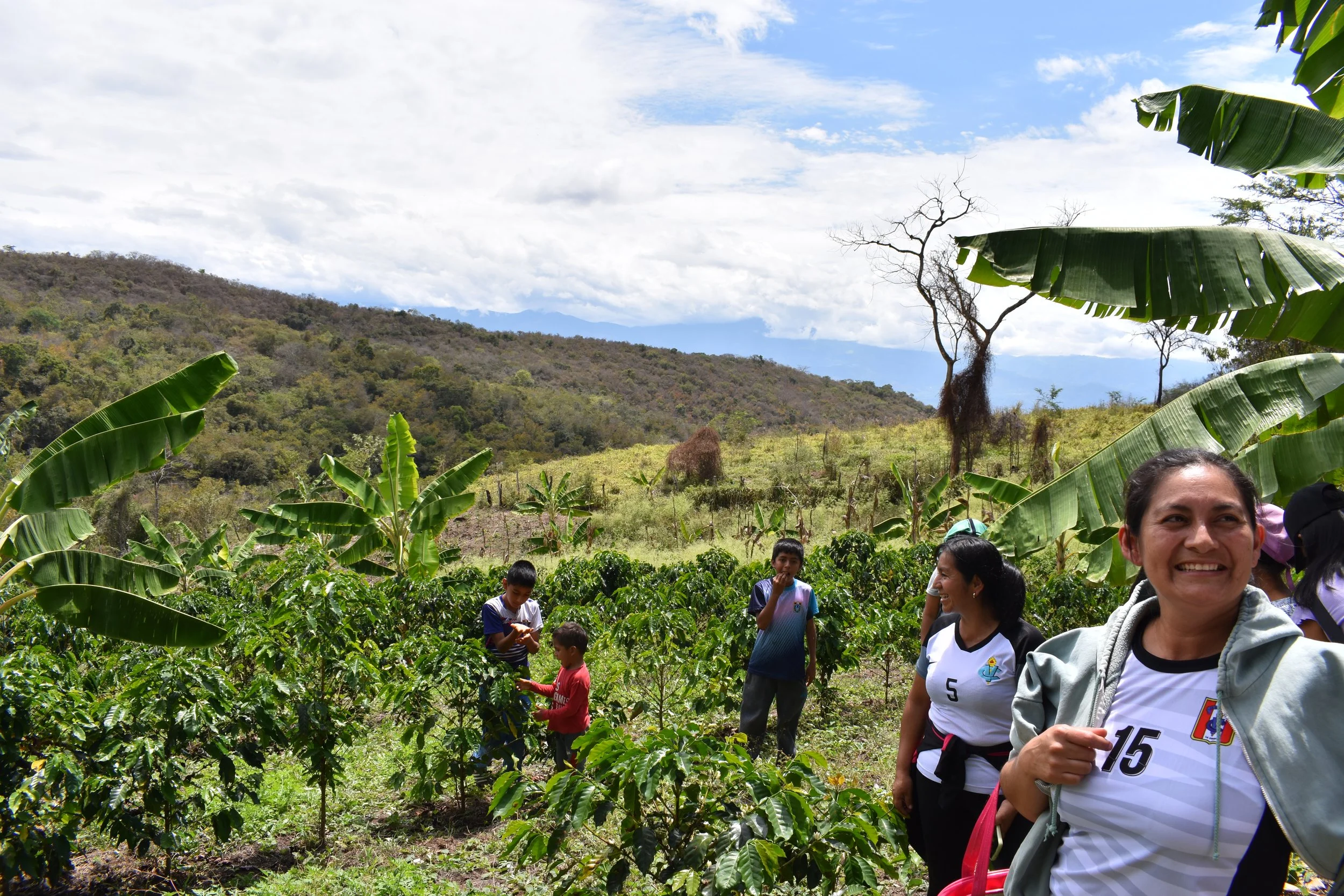
Members of La Coipa community in San Ignacio, Peru whose coffee we buy for our seasonal Community Espresso slot.
Our approach?
It’s all in the details.
At every stage of the business we focus on ways we can make things better.
Delivering quality and inspiring connection
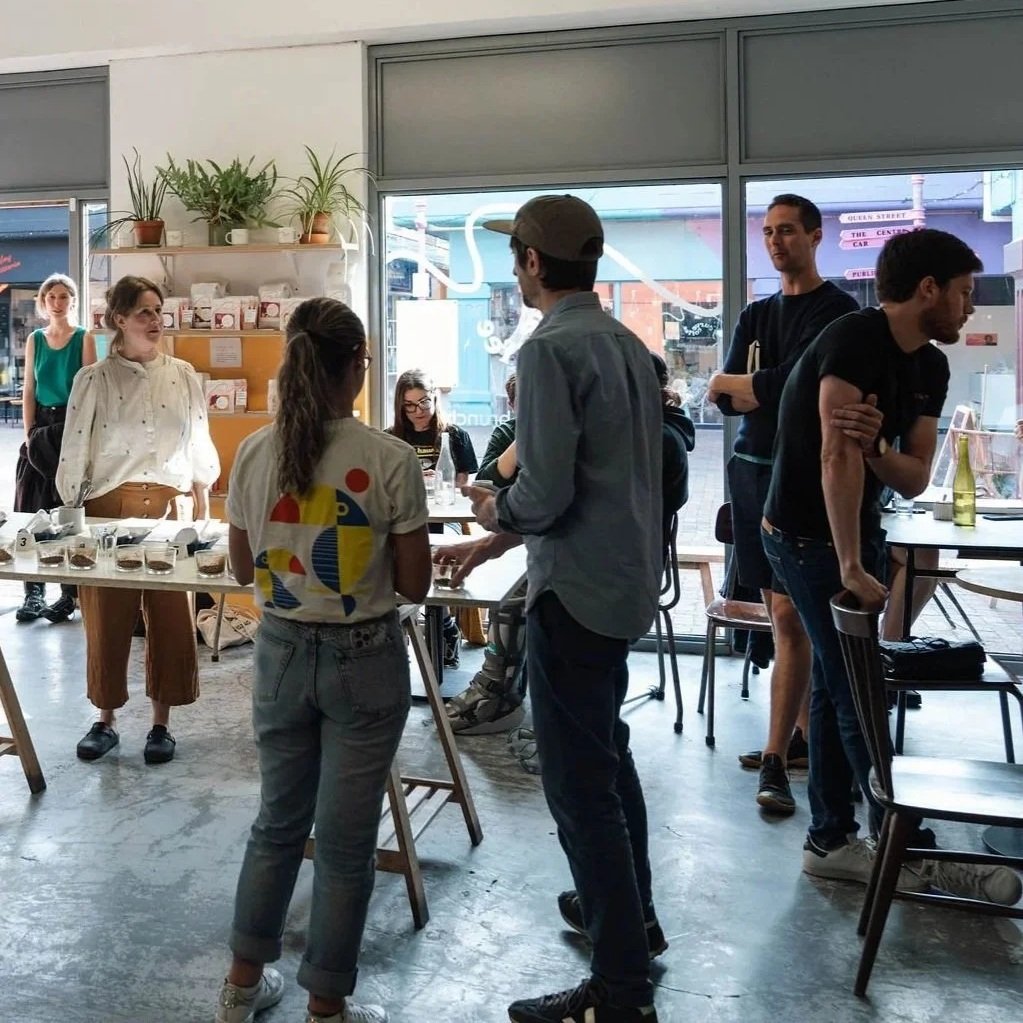
A public coffee tasting and talk with SIRUMA hosted at our Margate cafe.
We fell in love with speciality coffee while discovering the incredible flavour diversity and we love showcasing coffee from different producing regions throughout the year. Rather than blending coffees we prefer to focus on refining our roasts to bring out the potential each coffee holds within and showcase the range of coffees, their distinctive flavour profile, whether they are regional group lots or individual producers' micro-lots. Thanks to dedicated producers and our export partners we work to ensure excellent quality of the green coffee we start with and our roasting team work hard to consistently bring out its best.
As a roaster we take on a very privileged role within the coffee supply chain - standing between the producers growing and processing coffee as an organic agricultural product and those who enjoy preparing and drinking it as a beverage, be it professional baristas or home enthusiasts.
Our goal within this role is to make the experience of coffee lovers exciting and delicious. And at the same time to honour and truthfully represent the work of growers, processors, exporters and everyone involved in the supply chain. Through events, talks, cuppings and any other communication channels available to us, we want to responsibly share their stories and inspire passion for coffee and connection to the land and people who produce it.
Building collaborative & equitable supply chains
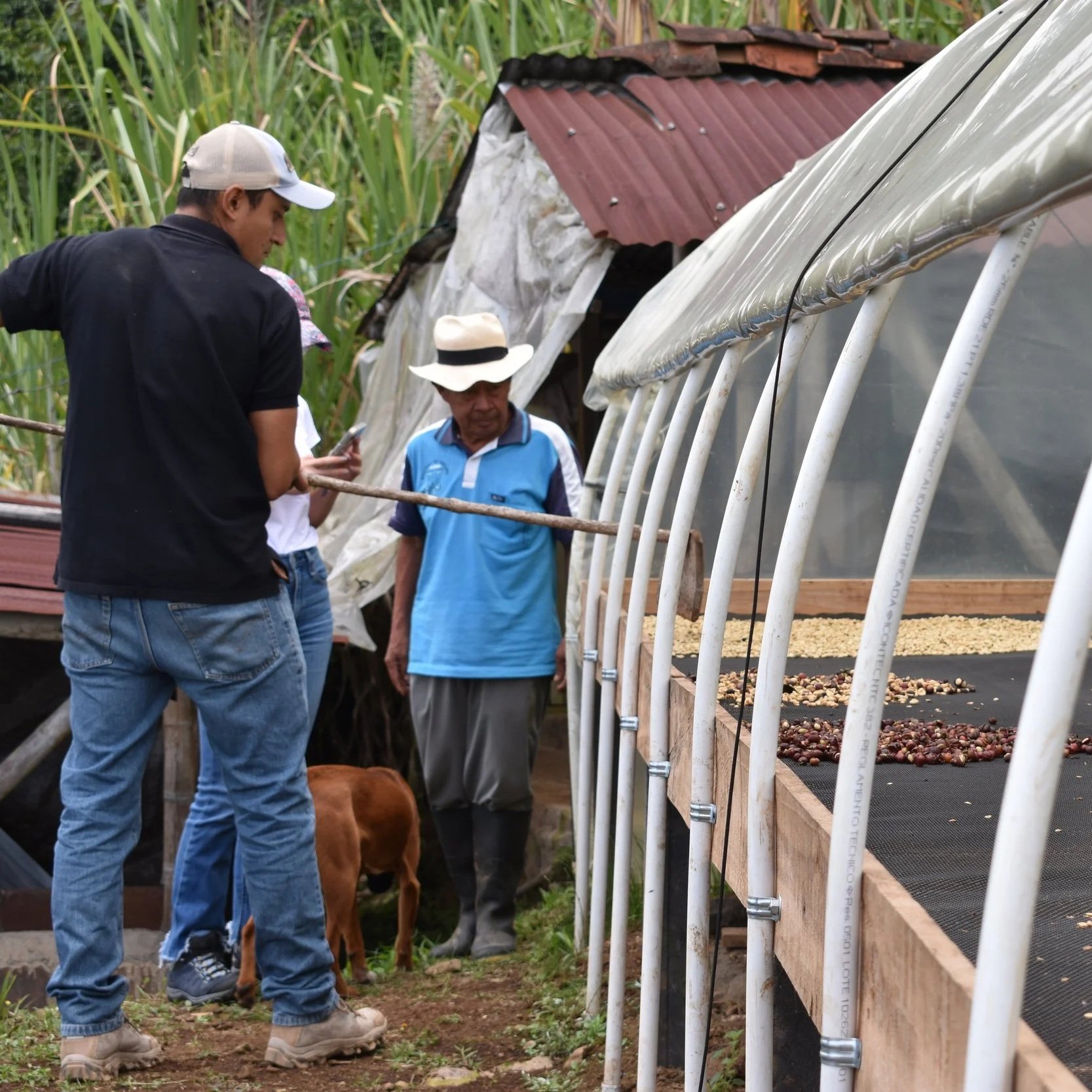
Jerry - Siruma’s (our exporting partner in Colombia) argonomer and Don Baltazar of Finca La Mateguadua in San Lorenzo, Caldas, Colombia. Jerry works in the area to support growers, providing agronomy assistance and workshops including good processing and drying practices - one of the biggest challenges in the region.
This means working toward dismantling the colonial power dynamics that still exist within the coffee supply chains, and treating producers as equal partners. We believe that we need to start by matching the coffee quality and associated production cost with adequate prices paid at farm level coupled with context needs-based support for farming communities.
Over the recent years we have pivoted our sourcing and committed to purchasing the bulk of our coffees from the same communities, and in some case individual producers, year after year and from places where our purchasing contributes to positive local development.
We work closely with carefully selected and impact-driven export and import partners to build resilient supply chains that prioritise growers and provide relevant support to improve their livelihoods. Together we work to ensure that coffee farming is not only a viable income source for the millions small-holder farmers currently responsible for most of the world’s coffee production but also an attractive and profitable prospect for younger generations.
Looking after our planet
When it comes to improving our environmental impact and carbon footprint, we take a holistic approach in finding ways to do this directly within in our operations as well as our supply chains and downstream distribution.
Promoting Regenerative Agriculture & Ecosystems Protection
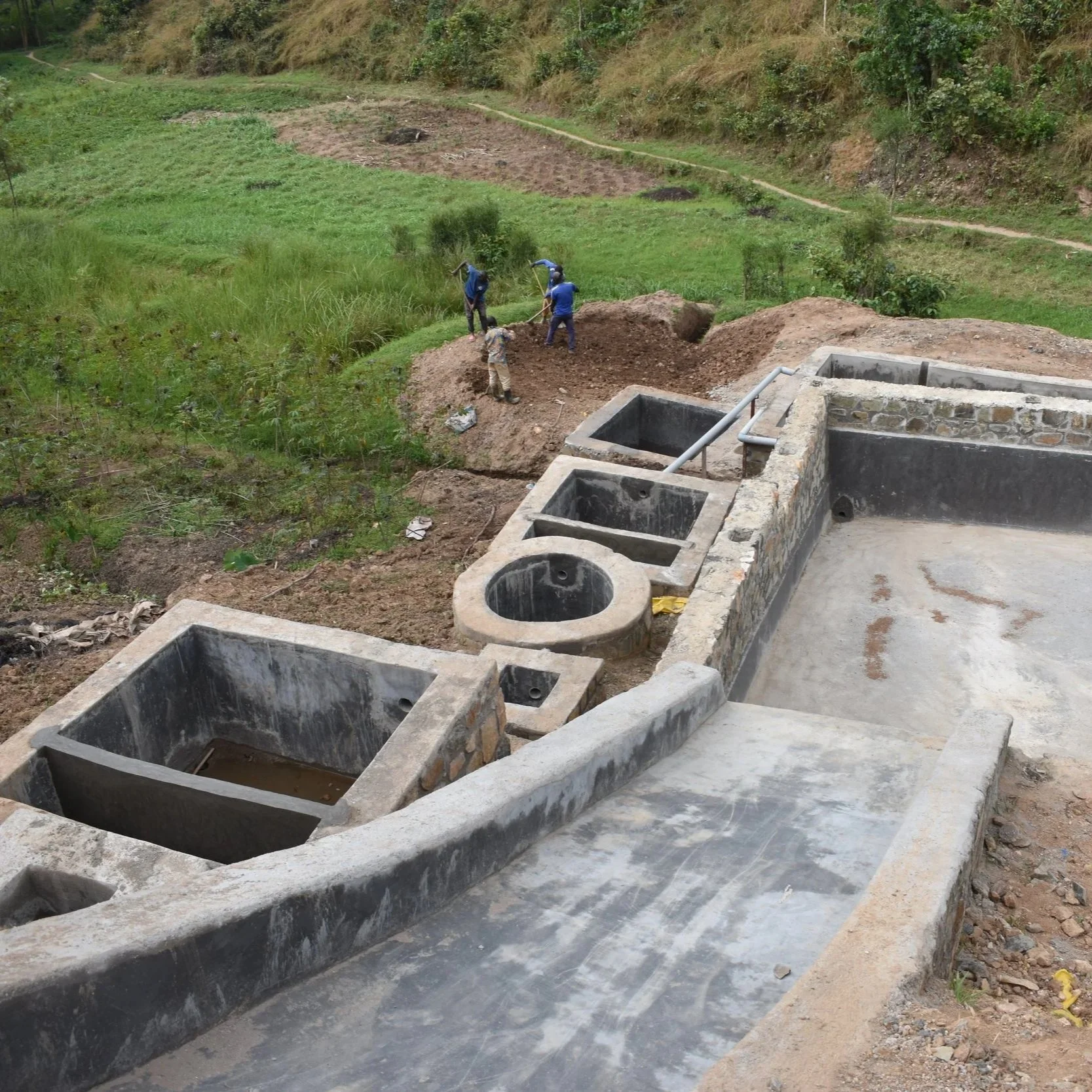
New water treatment facility at the Cyesha washing station on the shores of Lake Kiwu in Rwanda, operated by our partners Muraho Coffee Company. The station works to efficiently clean contaminated processing water as well as to turn coffee pulp into a nutritious compost which is then distributed to local growers as organic fertiliser improving coffee yields.
At farm level, the main areas contributing to carbon emissions are in farm management and processing. This includes the potential use and type of herbicides, pesticides and fertilisers as well as the treatment of by-products generated from production such as coffee pulp removed during washed processing and waste water from fermenting and washing coffee.
We work closely with our export partners to help us understand the reality on coffee farms and prioritise working with those suppliers who actively implement environmental protection in their own operations and engage with growers to promote better practices while ensuring good yields and supporting livelihoods.
At times this includes education and changing mindsets to promote environmental protection. Other times it means supporting growers (often from indigenous communities) who are already protecting their lands. And often also engaging with projects like investing in soil analysis to help growers reduce fertiliser input, promoting regenerative farming practices or designing and building efficient water treatment and composting facilities.
Working toward Net Zero & Circular Economy
Within our roasting operations the key areas for improvement are the fuel used for roasting, the packaging materials and means of distribution for our coffee. We are continuously working to improve how we map and measure our impact to find ways we can reduce our emissions before looking at offsetting those that we cannot eliminate.

Reducing fossil fuel used in roasting
Whilst it is currently not viable for us to use other fuel than gas for the volume we produce, we have purposefully invested in a state of the Loring Smart roasting machine which uses an air recirculation system and makes the use of fuel as efficient as possible. We are currently exploring the viability of investing in a fully electric large capacity roaster vs using BioGas to power a gas operated option.
Renewable electricity
For all our electricity needs we have switched to Octopus Energy for their commitment to supplying energy from renewable sources and investing in improving renewable energy infrastructure.
Packaging
All our packaging is currently made of post-consumer recycled plastic material which can be recycled in soft-plastic streams (Code 4) collected in all larger supermarkets. We have decided to use this rather than compostable materials due to the lack of commercial composting facilities available to the vast majority of our customers here in the UK. We are exploring a paper based option for our small-size retail bags.
Couriers & distribution
We use Royal Mail and DPD as our carriers as both of these are currently the best available options, investing in greener business practices and committed to lowering their emissions. Everything is a constant work in progress and we are always learning and working toward improving our practices.
Supporting Social & Environmental Projects
Inspired by Patagonia’s 1% for the Planet Scheme , we donate 1% of all our revenue toward community-centred projects that contribute to sustainable development and environmental protection. We split these contributions between coffee producing communities whose coffees we purchase and grassroots organisations in our local community in Margate.
Better future in coffee is possible and together we can make it happen!
With every purchase you make, you’re helping build a coffee industry where everyone can thrive!
Thank you for being part of our mission!
